
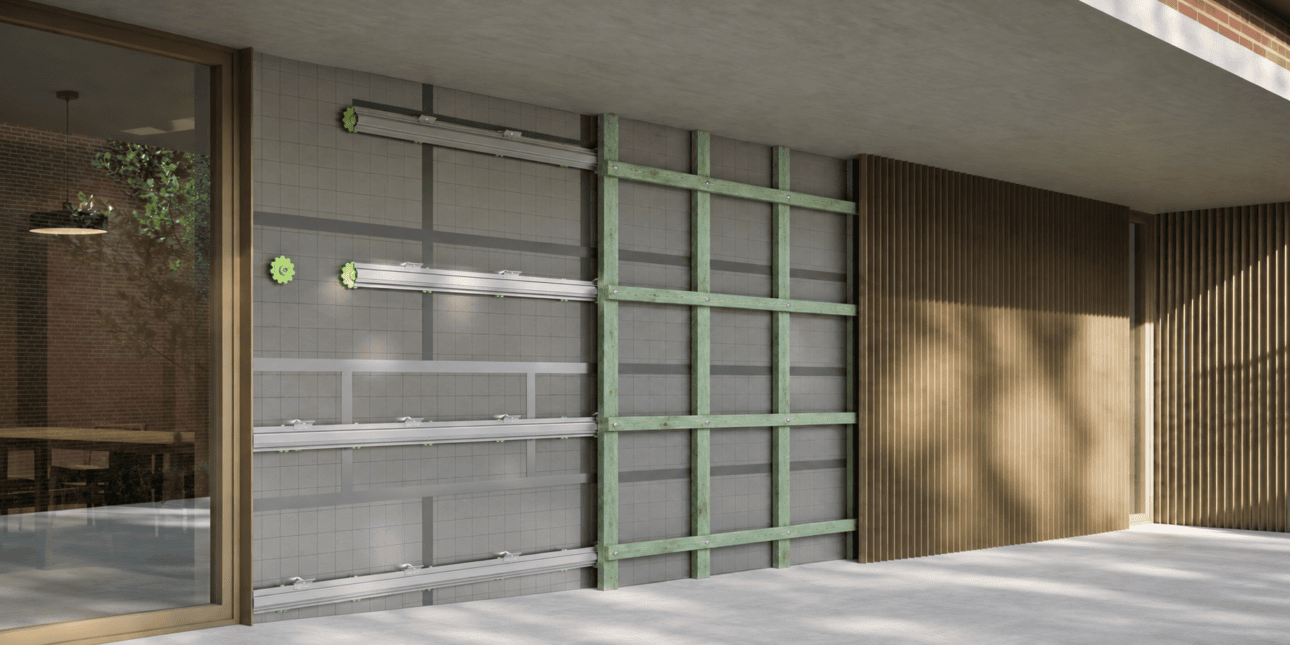
When installing cladding, a timber support structure often appears to be the most cost-effective option. The cost of the material is generally lower than that of aluminium. However, if you only consider the purchase price, you are only seeing part of the picture.
After all, what happens when you also take into account material wastage, installation time and long-term performance? We compare wood and aluminium using the example of a façade clad with Alinel cladding.
How much does a wooden or aluminium support structure cost?
For a timber support structure In this example, you’ll pay approximately €20 per m². For a aluminium support structure As with RGL8, the cost of materials is approximately €25 per m².
That is a price difference of approximately 25%.
Material loss reduces the price difference
Wooden battens are not always perfectly straight. Because of warped or unusable battens, you need to allow for a wastage of approximately 15% when constructing a wooden supporting structure.
As a result, the actual cost of timber in this example quickly rises from €20 to around €23 per m². This reduces the difference compared with aluminium to just €2 per m².
And the installation hasn’t even started yet.
A wooden support structure takes longer to assemble
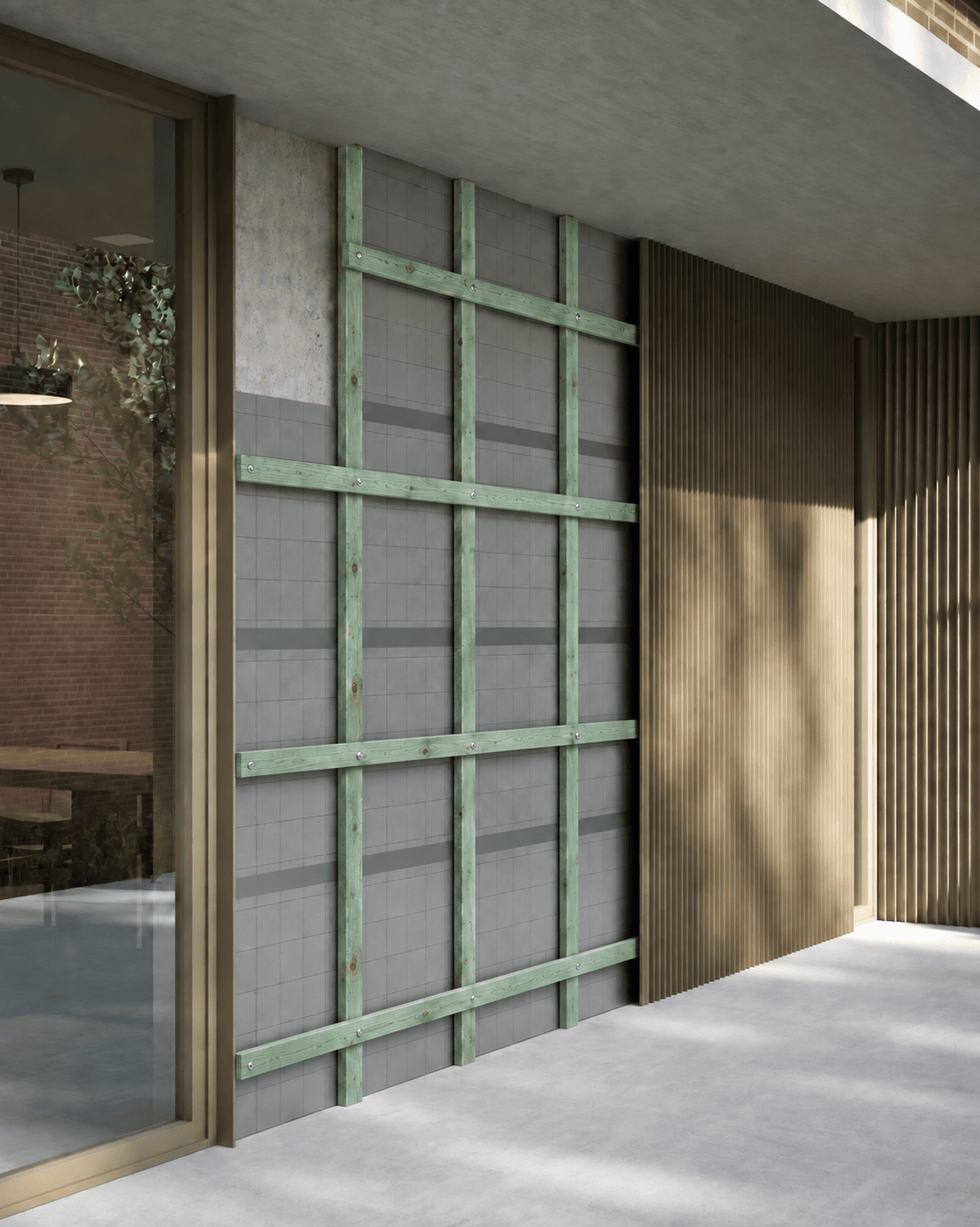
A traditional timber support structure for vertical Alinel cladding usually requires both horizontal and vertical battens. This dual structure requires extra material, but above all, extra labour hours.
Furthermore, the wooden slats must be carefully selected, positioned and aligned. Any irregularities in both the substrate and the wood must be accommodated during installation.
That takes time. And time costs money.
RGL8 has been developed to speed up installation
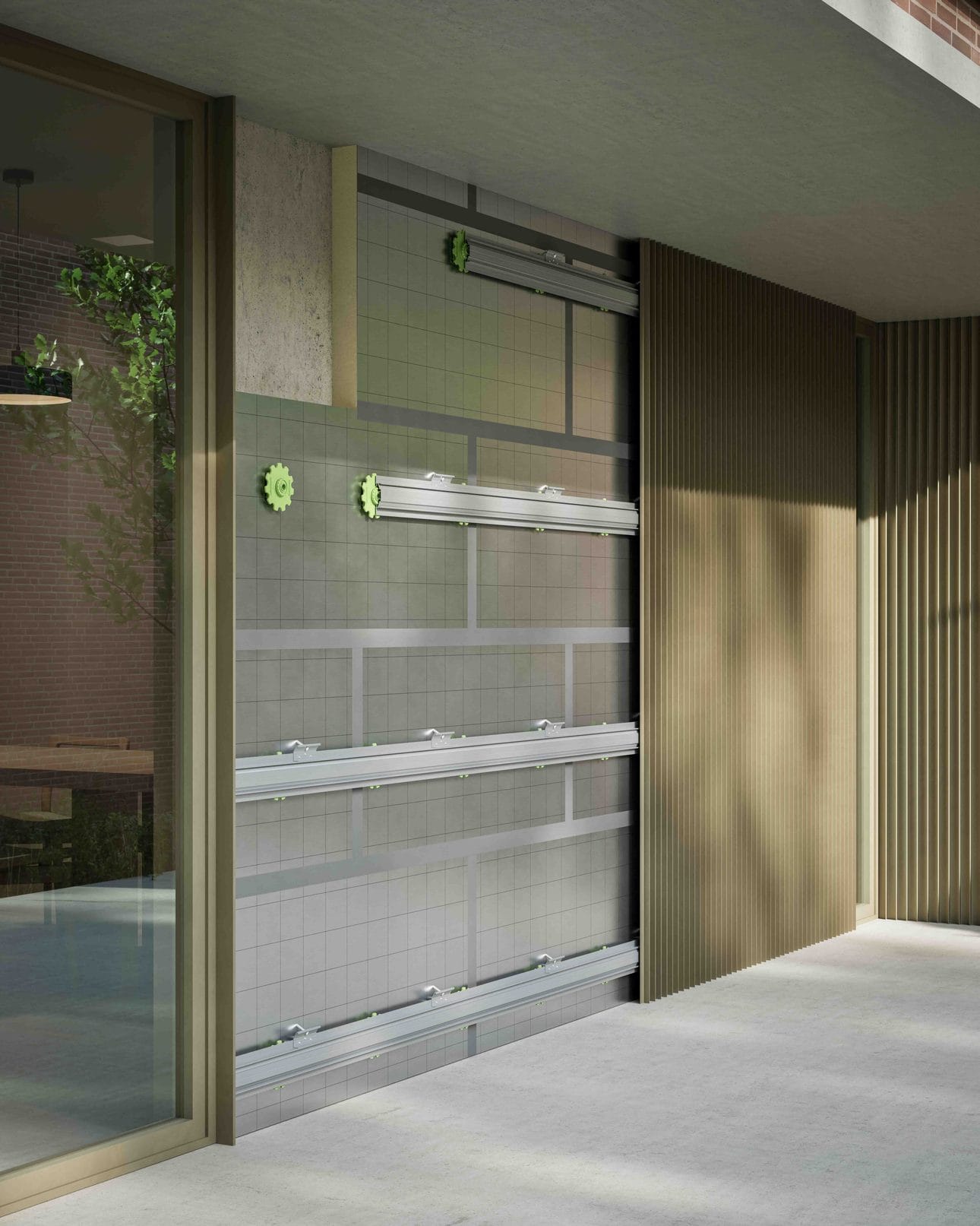
RGL8 by Backforce is an adjustable aluminium support structure suitable for all types of cladding. The system is easy to align and quick to install, meaning that fitters spend less time creating a level and stable base for the cladding.
In practical terms, this means the following for the installation of Alinel:
- less time is needed to align the supporting structure;
- no wastage due to warped or unusable slats;
- fewer man-hours per square metre;
- a dimensionally stable base for the cladding;
- a single sustainable and recyclable material behind the aluminium cladding.
Look beyond the price per square metre
So the cost of the materials does not tell the whole story. To make a fair comparison, you need to look at the total cost of the supporting structure:
| Cost or property | Wooden supporting structure | RGL8 aluminium support structure |
|---|---|---|
| Guide price for materials | €20 per square metre | €25 per square metre |
| Possible loss of material | Approximately 15% | No loss due to warping |
| Effective material cost in this example | Approximately €23 per square metre | Approximately €25 per square metre |
| Structure | Horizontal and vertical framework | Horizontal or vertical framework |
| Alignment | More labour-intensive | Quick and easy to adjust |
| Dimensional stability | May warp or bend | Dimensionally stable |
| Recyclability | Treated timber cannot be recycled | Recyclable |
The prices quoted are for guidance only. The actual cost depends on the project, the substrate and the installation conditions.
Once you factor in the labour costs as well as the cost of materials, RGL8 may ultimately prove even more cost-effective than a traditional timber supporting structure. So if aluminium performs better and can work out cheaper in the long run, why would you automatically opt for timber?
Frequently Asked Questions
An adjustable support structure such as the RGL8 can compensate for any unevenness in the substrate during installation. This allows the installer to create a level base before the cladding is fitted.
An aluminium support structure is particularly useful when speed of installation, dimensional stability and efficient alignment are important. To make the right choice, it is best to compare the total cost of materials and labour.
 Nederlands
  Français
  English (UK)